Forschung
Topic guide — what do these subjects study?
These browsing tags overlap: a paper can belong to several topics. Counts show this bibliography, not the number of papers in the whole field. A topic with zero papers still has a learning explanation; it does not imply a publication here. Use the topic filter with year, author role and search. “Mass spectrometry” is the usual term for measuring masses; optical spectroscopy measures spectra. Topic explanations: English.
Existing research themes
N = Z nuclei / MASSPASS (4)
Precision masses near equal neutron and proton numbers probe shell evolution and astrophysical reaction paths.
Typical observables: See the linked research programme and papers.
Show papers (4)Q values for neutrino physics (11)
Decay-energy measurements assess candidates for direct neutrino-mass experiments.
Typical observables: See the linked research programme and papers.
Show papers (11)Atomic masses and isotope shifts (1)
Accurate atomic masses support isotope-shift analysis and the separation of mass and nuclear-size effects.
Typical observables: See the linked research programme and papers.
Show papers (1)Storage rings, MR-TOF and MCP detectors (7)
Ion manipulation, precision timing and position detection enable rare-isotope mass measurements.
Typical observables: See the linked research programme and papers.
Show papers (7)Mass methods and beams
Mass spectrometry and ion-beam applications (71)
Measures and separates ions by mass-to-charge ratio. Precision masses and clean isotope beams support decay-energy, nuclear-structure and astrophysics studies.
Typical observables: Atomic masses, Q values, beam purity and emittance.
Show papers (71)Mass-spectrometry innovations in heavy-ion research (27)
Develops Penning traps, MR-TOF instruments, storage rings, timing detectors and ion optics for rare isotopes. Read resolving power, accuracy and efficiency separately: a narrow peak alone does not establish an accurate mass.
Typical observables: Resolving power, calibration, timing, transmission and systematic uncertainty.
Show papers (27)Laser spectroscopy and ion sources (4)
Laser spectroscopy uses isotope shifts and hyperfine structure to determine radii, spins and moments. Ion sources create and prepare the required beam; a laser-ablation source is not automatically a laser-spectroscopy measurement.
Typical observables: Isotope shifts, hyperfine constants, charge radii, beam yield and purity.
Show papers (4)Nuclear structure
Shape coexistence and nuclear structure (0)
Different intrinsic nuclear shapes can produce low-lying states in the same nucleus. Energies, electromagnetic transitions and radii help distinguish coexistence from a gradual change in deformation; a mass trend alone is not proof.
Typical observables: Low-lying 0+ states, E0/E2 strengths, charge radii and configuration mixing.
Show papers (0)Nuclear structure and isotope evolution (25)
Follows how shell structure, pairing and deformation change along isotope or isotone chains. Here isotope evolution means changes with proton or neutron number, rather than motion of isotopes through a material.
Typical observables: Separation energies, shell gaps, pairing indicators, radii and isomers.
FRIB nuclear theory · IGISOL research programme ·
Show papers (25)Multi-neutron systems (4)
Investigates correlations and possible resonances in systems made only of neutrons. A short-lived resonance-like structure must be distinguished from a bound nucleus and from final-state interaction effects.
Typical observables: Missing-mass spectra, relative energies, widths and reaction-model dependence.
Observation of a correlated free four-neutron system ·
Show papers (4)Dipole resonances and strength distributions (1)
Examines dipole excitations and how their strength is distributed in energy. Electric dipole motion can reveal collective response and weakly bound neutron dynamics; a low-energy peak requires interpretation before being called a distinct resonance.
Typical observables: E1 strength, excitation energy, decay channels and polarizability.
Show papers (1)Octupole deformation and correlations (1)
Reflection-asymmetric, often pear-like shapes involve octupole degrees of freedom. Static deformation and octupole vibrations are different possibilities, tested through spectra, parity partners and electric-octupole transition strengths.
Typical observables: Parity doublets, E3 strengths, collective bands and deformation indicators.
Octupole collective motion review ·
Show papers (1)Nuclear structure and isospin symmetry (3)
Compares mirror nuclei and isobaric multiplets by exchanging proton and neutron roles. Coulomb effects and other charge-dependent interactions break ideal isospin symmetry, affecting displacement energies and precision weak-decay tests.
Typical observables: Multiplet masses, Coulomb displacement energies, IMME coefficients and decay corrections.
FRIB fundamental symmetries · FRIB nuclear theory ·
Show papers (3)Neutron skins and nuclear symmetry energy (0)
The neutron skin is the difference between neutron and proton root-mean-square radii. Its relation to the density dependence of symmetry energy is model-dependent; charge radii alone do not directly measure a neutron skin.
Typical observables: Neutron/proton radii, parity-violating scattering, dipole polarizability and equation-of-state constraints.
Show papers (0)Decay and symmetries
Beta decay and fundamental symmetries (2)
Uses decay rates, spectra and angular correlations to test the weak interaction. Searches for time-reversal violation or non-standard couplings need controlled nuclear and detector effects; an ordinary beta-decay measurement is not itself evidence of symmetry violation.
Typical observables: Correlation coefficients, Vud, spectral shapes and systematic corrections.
Show papers (2)Neutrino masses and double beta decay (13)
Direct beta or electron-capture endpoints probe the neutrino mass scale through decay kinematics. Double-beta studies also need Q values and nuclear matrix elements; neutrinoless decay, if observed, would test lepton-number conservation. These methods make different assumptions.
Typical observables: Q values, endpoint spectra, phase-space factors, matrix elements and backgrounds.
DOE: neutrinoless double beta decay ·
Show papers (13)Nuclear structure and isotope decay (29)
Uses radioactive decay to identify levels, spins, transition strengths and long-lived isomers. Decay energies and branching ratios connect the mass surface to the structure of parent and daughter nuclei.
Typical observables: Half-lives, Q values, branching ratios, level schemes and beta strength.
IGISOL research programme · FRIB fundamental symmetries ·
Show papers (29)Nuclear astrophysics
Nucleosynthesis and the chemical evolution of stars (7)
Links nuclear reaction and decay networks to the abundance of elements in stars and ejecta. Masses and lifetimes constrain pathways, while stellar evolution and mixing determine how products reach later generations of stars.
Typical observables: Abundances, reaction flows, masses, half-lives and astrophysical conditions.
Show papers (7)Nuclear reactions and nucleosynthesis in novae (0)
Classical novae are thermonuclear outbursts on accreting white dwarfs. Resonances, proton captures and beta decays determine reaction rates and the isotopes ejected; a supernova or Big-Bang study is not automatically a nova study.
Typical observables: Resonance energies and strengths, temperature-dependent rates and ejecta yields.
JINA: nuclear astrophysics · IGISOL research programme ·
Show papers (0)Astrophysical reactions and nuclear dynamics (8)
Connects laboratory cross sections and resonances with reaction rates in astrophysical plasmas. Reaction mechanisms, target states and uncertainties matter when translating a beam experiment into a stellar rate.
Typical observables: Cross sections, resonance strengths, reaction rates and network sensitivity.
Show papers (8)Heavy nuclei and reactions
Superheavy-element synthesis and decay (0)
Creates the heaviest nuclei in fusion reactions and identifies them through decay chains. Production probabilities compete with fission, and shell effects influence survival. Transfer reactions on heavy targets do not automatically imply superheavy-element synthesis.
Typical observables: Evaporation-residue cross sections, alpha-decay chains and fission lifetimes.
GSI superheavy-nucleus research ·
Show papers (0)Fission-fragment dynamics and energy distributions (2)
Studies how a fissioning nucleus divides mass, charge, energy and angular momentum between fragments. Fragment yields and isomer populations constrain the roles of shell structure, excitation and the scission process.
Typical observables: Mass/charge yields, total kinetic energy, spin distributions and isomeric ratios.
GSI: shell effects in fission ·
Show papers (2)Detector technologies
Superconducting calorimeters for precision detection (0)
Measures deposited energy as a tiny temperature rise at cryogenic temperatures. Transition-edge sensors use the steep resistance change near a superconducting transition; energy resolution, response time and background must be assessed together.
Typical observables: Energy resolution, thermal response, pile-up, calibration and noise.
Show papers (0)Resistive plate chambers in particle detection (0)
Gas detectors with resistive electrodes amplify ionization signals in a strong electric field. They provide fast timing and triggering in particle experiments; they are a different technology from MCP detectors.
Typical observables: Efficiency, time resolution, rate capability, gas mixture and ageing.
CMS resistive plate chambers ·
Show papers (0)Mit hochpräziser Ionenfallen- und Speicherring-Massenspektrometrie untersuche ich Fragen der Neutrinophysik, der Kernstruktur und der nuklearen Astrophysik. Die Publikationen zu jedem Thema stammen aus der gemeinsamen Publikationsdatenbank; die vollständige Liste steht unter Publikationen .
Methoden in Bildern #
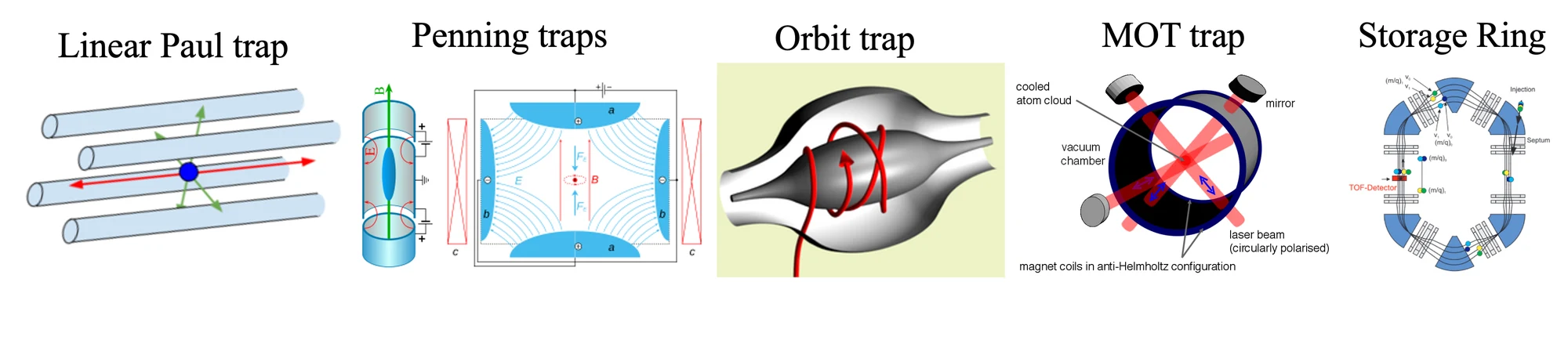

Die Familie der Ionen- und Atomfallen — wie sie funktionieren
Animierte Skizzen, nicht maßstäblich. Rot/Blau = Elektrodenpolarität (wechselt mit der RF, wo zutreffend); die farbige Spur ist ein Ion oder Atom.
Exotische N = Z-Kerne bis ¹⁰⁰Sn — MASSPASS #
Projekt der Academy Research Fellowship (Leitung). Massenmessungen exotischer N = Z-Kerne und ihrer Nachbarn bis ¹⁰⁰Sn an IGISOL (Jyväskylä) und RIKEN (Japan): Schalenentwicklung hin zum schwersten selbstkonjugierten doppelt magischen Kern und kernphysikalische Eingangsdaten für den rp-Prozess. Projektseite
4 Literatureinträge
- , Direct mass measurement of ⁹¹Rh and ⁸⁹Ru and mid-shell trend of the one-proton separation energies for N = Z + 1 nuclei, Phys. Rev. C 114, 034311 (2026)
- , Direct mass measurement of ⁹³Pd and implications for the isomer structures in ⁹⁴Ag, Phys. Rev. Research 7, L042022 (2025)
- , High-precision mass measurements of neutron-deficient silver isotopes probe the robustness of the N = 50 shell closure, Phys. Rev. Lett. 133, 132503 (2024) · arXiv:2401.07976
- , Study of mass-measurement method for N = Z nuclei with isochronous mass spectrometry, Nucl. Phys. Rev. 36, 294 (2019)
Q-Werte zur Bestimmung der Neutrinomasse #
Direkte Penning-Fallen-Messungen von Zerfallsenergien (Q-Werten) identifizieren β⁻- und Elektroneneinfang-Übergänge mit extrem kleinem Q-Wert für zukünftige direkte Neutrinomassen-Experimente und schließen ungeeignete Kandidaten aus.
11 Literatureinträge
- , Precise determination of electron-capture Q value of ¹¹³Sn decay related to electron neutrino mass measurements, Phys. Rev. C 114, 035501 (2026) · arXiv:2604.03410 — QEC = 1039.25(19) keV
- , High-precision direct decay energy measurements of the electron-capture decay of ⁹⁷Tc, Phys. Rev. C 112, 035501 (2025) · arXiv:2502.04490 — QEC = 324.82(21) keV
- , High-precision measurements of the atomic mass and electron-capture decay Q value of ⁹⁵Tc, Phys. Lett. B 859, 139094 (2024) · arXiv:2406.05273
- , Direct high-precision measurement of the mass difference of ⁷⁷As–⁷⁷Se related to neutrino mass determination, Eur. Phys. J. A 60, 104 (2024) · arXiv:2401.15242
- , β⁻ decay Q-value measurement of ¹³⁶Cs and its implications for neutrino studies, Phys. Rev. C 108, 045502 (2023) · arXiv:2306.04604
- , Direct determination of the atomic mass difference of the pairs ⁷⁶As–⁷⁶Se and ¹⁵⁵Tb–¹⁵⁵Gd rules out ⁷⁶As and ¹⁵⁵Tb as possible candidates for electron (anti)neutrino mass measurements, Phys. Rev. C 106, 015502 (2022) · arXiv:2202.07656
- , High-precision electron-capture Q value measurement of ¹¹¹In for electron-neutrino mass determination, Phys. Lett. B 832, 137226 (2022) · arXiv:2201.12573
- , Observation of an ultralow-Q-value electron-capture channel decaying to ⁷⁵As via a high-precision mass measurement, Phys. Rev. C 106, 015501 (2022) · arXiv:2203.00457
- , High-precision measurement of a low Q value for allowed β⁻ decay of ¹³¹I related to neutrino mass determination, Phys. Lett. B 830, 137135 (2022)
- , ¹⁵⁹Dy electron-capture: a new candidate for neutrino mass determination, Phys. Rev. Lett. 127, 272301 (2021) · arXiv:2106.06626
- , Direct measurement of the mass difference of ⁷²As–⁷²Ge rules out ⁷²As as a promising β-decay candidate to determine the neutrino mass, Phys. Rev. C 103, 065502 (2021) · arXiv:2103.08729
Atommassen für Isotopieverschiebungs-Studien #
1 Literatureinträge
- , High-precision measurement of the atomic mass of ⁸⁴Sr and implications to isotope shift studies, Eur. Phys. J. A 60, 147 (2024) · arXiv:2404.02025
Speicherringe, MR-TOF und MCP-Detektoren #
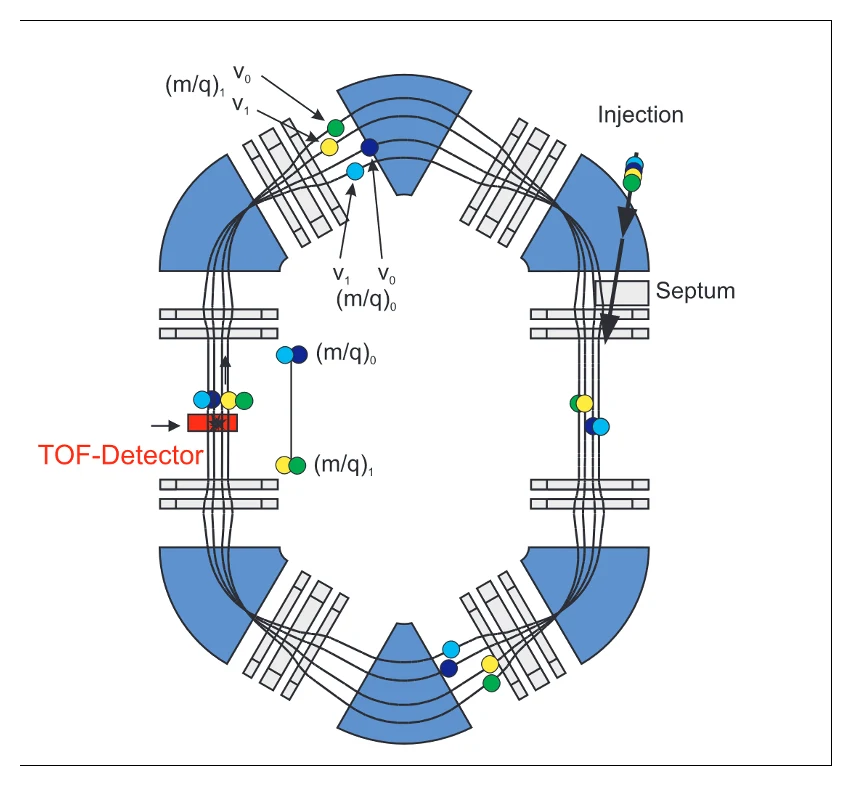
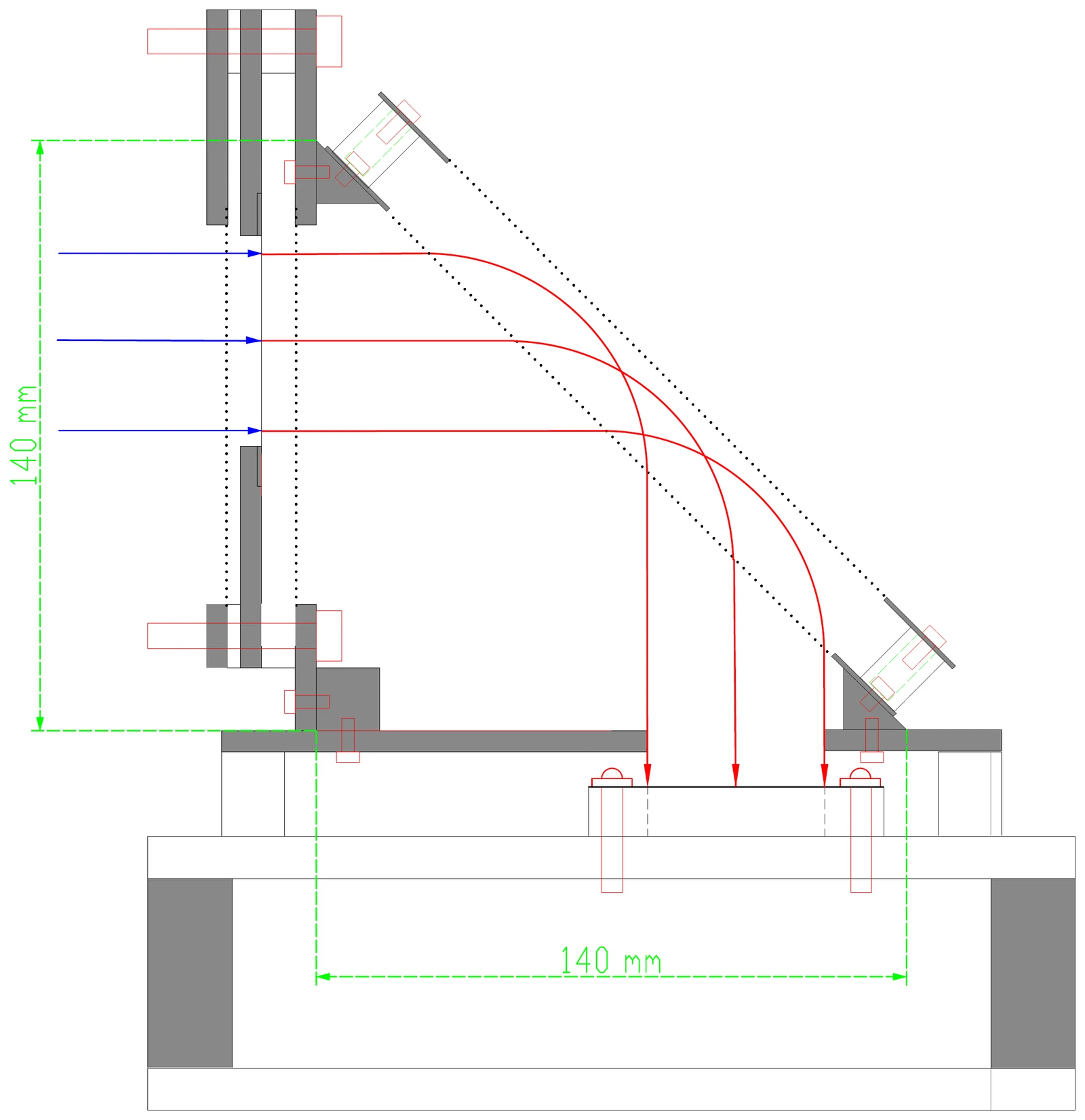
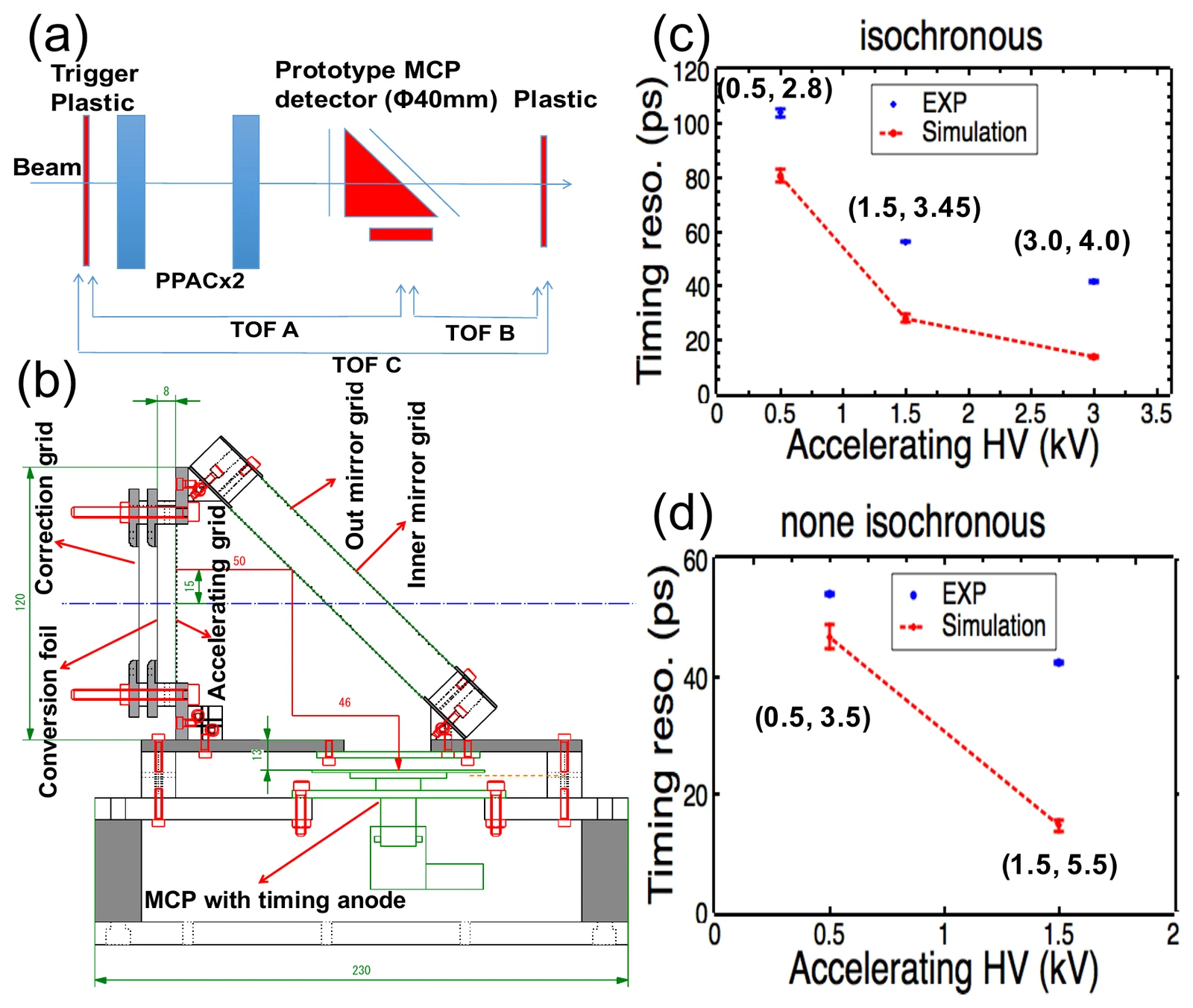
Promotion am RIKEN Rare-RI Ring: Identifikation von Sekundärionen für isochrone Massenmessungen sowie zeit- und ortsauflösende Mikrokanalplatten-Detektoren (MCP). Später MR-TOF-Spektrometer an IGISOL und am FRS Ion Catcher der GSI sowie Detektorkonzepte für HIAF.
7 Literatureinträge
- , High-resolution multi-reflection time-of-flight mass spectrometer for exotic nuclei at IGISOL, Nucl. Instrum. Methods A 1088, 171513 (2026)
- , Overview of high-performance timing and position-sensitive MCP detectors utilizing secondary electron emission for mass measurements of exotic nuclei at nuclear physics facilities, Sensors 24, 7261 (2024) — review
- , Development of a large-area timing and position-sensitive foil-MCP detector for mass measurements at the Rare-RI Ring in RIKEN, arXiv preprint (2021) · arXiv:2106.08264
- , Development of mirror-type MCP detectors for mass measurements at the Rare-RI Ring, JPS Conf. Proc. 35, 011023 (2021)
- , Scheme of high-resolution identification and selection of secondary ions for mass measurements with the Rare-RI Ring, Hyperfine Interact. 240, 92 (2019)
- , Electrostatic-lenses position-sensitive TOF MCP detector for beam diagnostics and new scheme for mass measurements at HIAF, Nucl. Sci. Tech. 30, 152 (2019) · arXiv:2105.14551
- , Timing performance of a mirror-type MCP detector for mass measurements at the Rare RI Ring, RIKEN Accel. Prog. Rep. 51, 152 (2018)
Ionenoptik-Design #
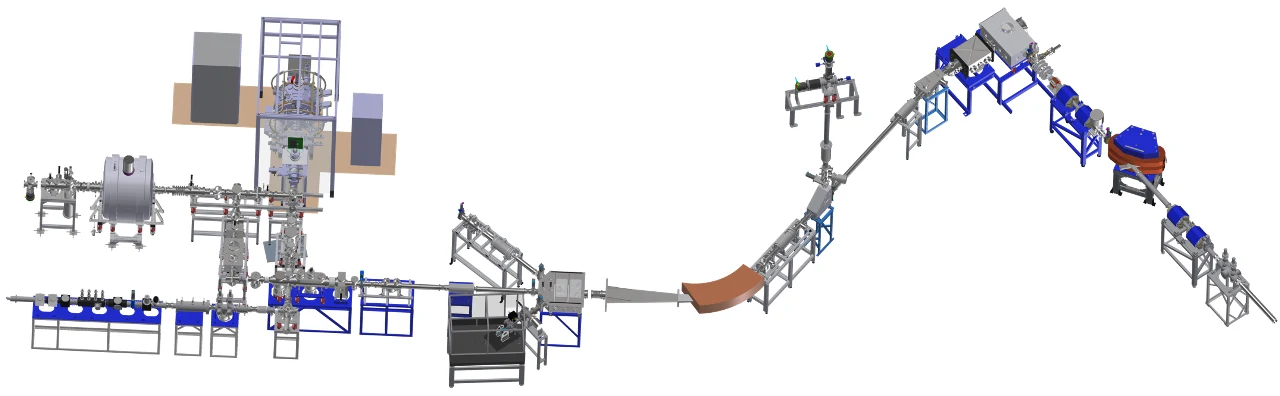
Ionenoptisches Design von Strahlführungen, Speicherringen und Fallenaufbauten: die Injektionsionenoptik des RIKEN Rare-RI Ring, Simulationsstudien isochroner Massenmessungen und heute RFQ-, MR-TOF- und Penning-Fallen-Strahlführungen mit SIMION.
- Z. Ge, Q. Wang, M. Wang, T. Uesaka, Study of mass-measurement method for N = Z nuclei with isochronous mass spectrometry, Nucl. Phys. Rev. 36, 294 (2019)
- Z. Ge et al., Online results for the injection ion optics of the Rare RI Ring, RIKEN Accel. Prog. Rep. 49, 180 (2016)
Kernphysik #
- Schalenentwicklung und magische Zahlen fern der Stabilität – N = Z-Kerne bis ¹⁰⁰Sn
- Isospinsymmetrie, Spiegelkerne und Coulomb-Verschiebungsenergien
- Separationsenergien, Paarung und Isomere aus präzisen Massen
- Q-Werte seltener Zerfälle für die Neutrinophysik
Nukleare Astrophysik #
- Massen an Wartepunkten des rp- und νp-Prozesses nahe N = Z
- Massen neutronenreicher Kerne für r-Prozess-Netzwerkrechnungen
- Kernphysikalische Eingaben für Röntgenbursts und den Ursprung der Elemente
Wissenschaftlicher Hintergrund #
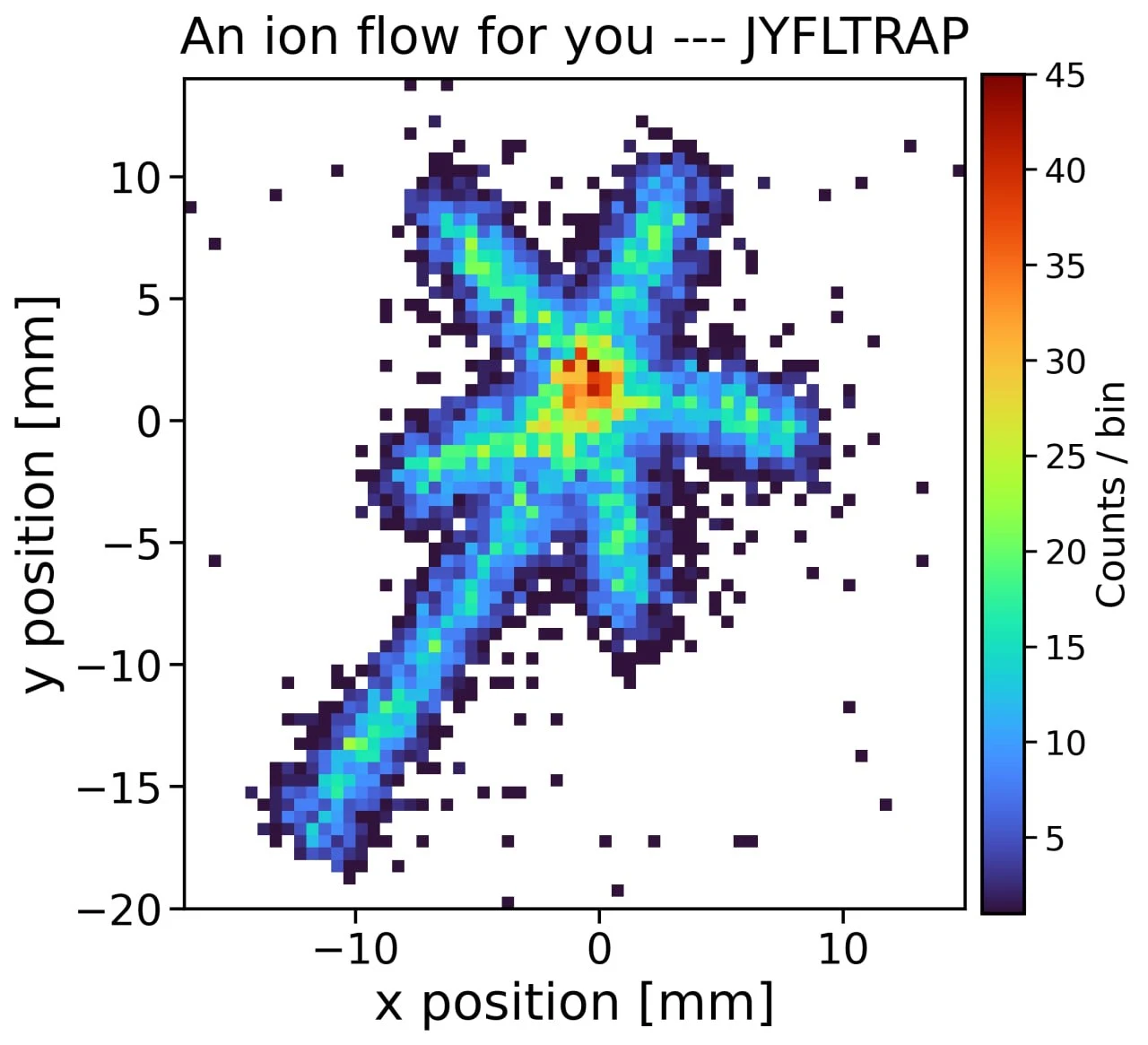
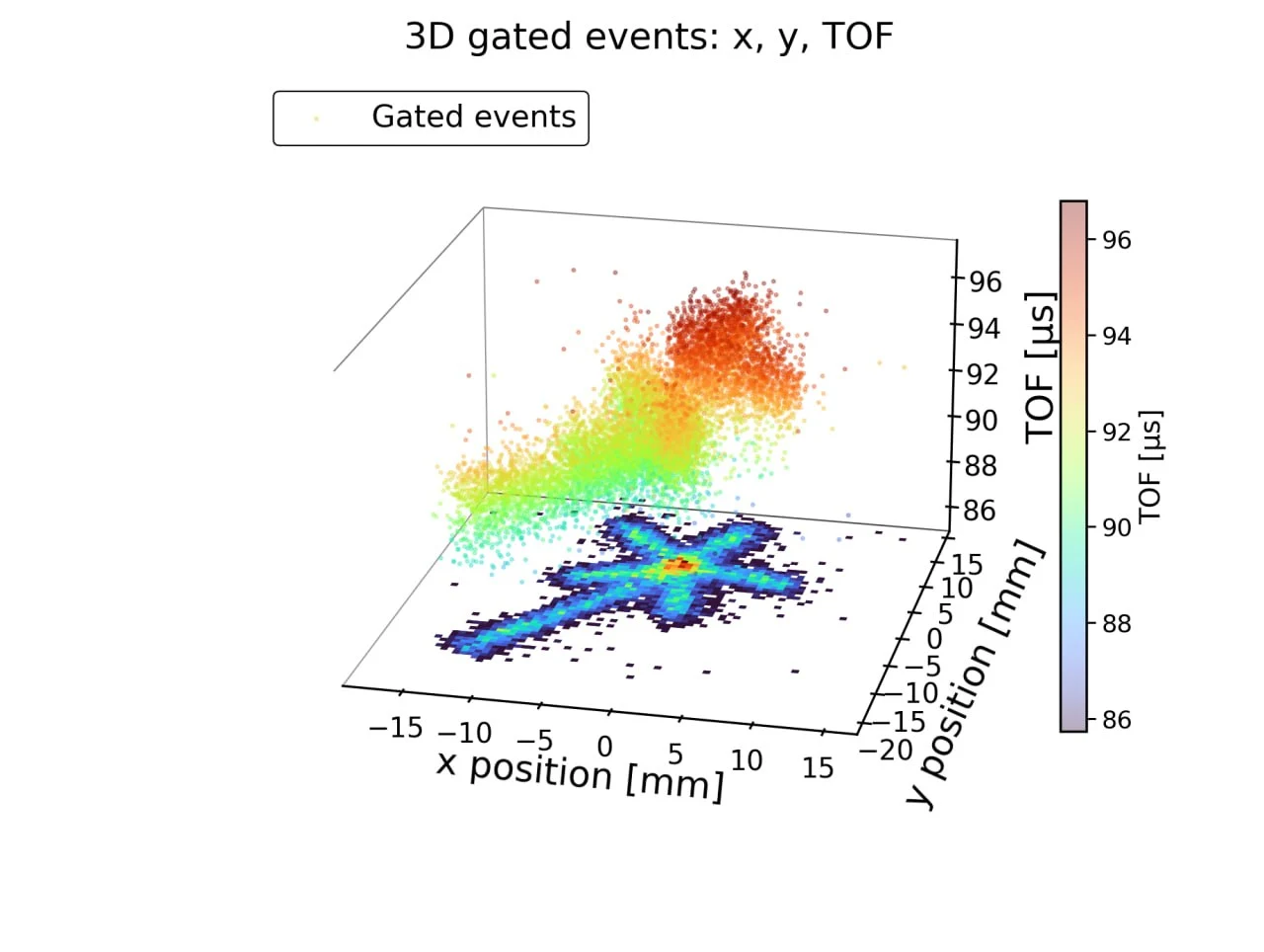
Penningfallen-Massenspektrometrie. Ein Ion der Ladung q und Masse m in einem starken Magnetfeld B und einem schwachen elektrostatischen Quadrupolpotential führt drei Eigenbewegungen aus; die Summe aus reduzierter Zyklotron- und Magnetronfrequenz ist in sehr guter Näherung die freie Zyklotronfrequenz νc = qB/(2πm). Der Vergleich von νc des Ions mit dem eines Referenzions bekannter Masse eliminiert das Magnetfeld; die Masse folgt aus einem Frequenzverhältnis. An JYFLTRAP reinigt eine erste Falle das Ionenpaket durch Puffergaskühlung, eine zweite führt die Messung durch; für kurzlebige Kerne sind relative Unsicherheiten von 10−8 und besser erreichbar. Bei der Flugzeit-Ionenzyklotronresonanz (TOF-ICR) wird die Anregungsfrequenz durchgestimmt, und die Resonanz zeigt sich als Minimum der Flugzeit zum Detektor; bei der Phasenabbildung (PI-ICR) wird die in fester Zeit akkumulierte radiale Phase auf einen ortsempfindlichen Detektor projiziert, was ein höheres Auflösungsvermögen liefert und niedrig liegende Isomere trennt.
Multireflexions-Flugzeit-Massenspektrometrie (MR-TOF). Die Ionen werden zwischen zwei elektrostatischen Spiegeln vielfach reflektiert, wodurch sich die Flugstrecke in einem kompakten Gerät auf hunderte Meter verlängert. Das Auflösungsvermögen R = m/Δm = t/(2Δt) wächst mit der Flugzeit, sodass Isobare innerhalb von Millisekunden trennbar werden; das Gerät dient als Isobarentrenner, Massenspektrometer und Strahldiagnose. Kalibriert wird mit Referenzionen, da m/q proportional zu (t − t0)2 ist.
Zerfallsenergien und Neutrinomasse. Der Q-Wert eines β⁻-Zerfalls oder Elektroneneinfangs ist die Differenz der Atommassen von Mutter- und Tochterkern, Q = [M(Mutter) − M(Tochter)]c2. Direkte Neutrinomassen-Experimente analysieren den Bereich nahe dem Endpunkt des Spektrums, wo ein sehr kleiner Q-Wert die Empfindlichkeit erhöht. Penningfallen-Messungen von Q mit Unsicherheiten unter 1 keV finden solche Übergänge mit ultrakleinem Q und schließen ungeeignete Kandidaten aus.
Kernstruktur. Aus Massen abgeleitete Bindungsenergien zeigen Schalenabschlüsse (Abfall der Zwei-Neutronen-Separationsenergie nach einer magischen Zahl), Paarung (Ungerade-gerade-Staffelung) und die zusätzliche Bindung von N = Z-Kernen; Spiegelkerne prüfen die Isospinsymmetrie über Coulomb-Verschiebungsenergien. ¹⁰⁰Sn ist der schwerste selbstkonjugierte Kern, der als doppelt magisch erwartet wird.
Nukleare Astrophysik. In Röntgenausbrüchen und im νp-Prozess verläuft der Reaktionsfluss nahe der Protonen-Abbruchkante und wartet an Kernen mit kleinem Protoneneinfang-Q-Wert; im r-Prozess legen die Neutronen-Separationsenergien den Pfad des Neutroneneinfangs fest. Massen sind daher zentrale Kernphysik-Eingangsdaten für die Herkunft der Elemente; siehe das Panel Periodensystem & Herkunft der Elemente .
Isotopieverschiebungen. In der Laserspektroskopie von Isotopenketten benötigt die Massenverschiebung genaue Atommassen; sie verringern die Unsicherheit der aus den gemessenen Verschiebungen extrahierten Ladungsradiendifferenzen.