
Zhuang Ge
Academy Research Fellow · Penning traps & MR-TOF · University of Jyväskylä
Zhuang Ge
Academy Research Fellow · Penning traps & MR-TOF · University of Jyväskylä
Move the pointer to deflect ions · click to inject a bunch
I am an Academy Research Fellow and Principal Investigator at the Department of Physics, University of Jyväskylä, Finland. My field is nuclear physics and nuclear astrophysics: I measure the masses, Q-values and decays of exotic nuclei with ion traps.
I work in the Exotic Nuclei and Beams (IGISOL) group with the JYFLTRAP Penning trap and multi-reflection time-of-flight (MR-TOF) mass spectrometry. As PI of the Academy Fellowship project MASSPASS , I lead mass measurements of exotic N = Z nuclei up to doubly magic ¹⁰⁰Sn at IGISOL and RIKEN.
I received PhDs from Saitama University / RIKEN Nishina Center (Japan) and from the University of Chinese Academy of Sciences / Institute of Modern Physics. I have worked at the storage-ring facilities of RIKEN, GSI and IMP and at IGISOL — as a postdoctoral researcher at JYFLTRAP (2019–2021) and in the FRS/Super-FRS group at GSI (2021–2023) — before returning to Jyväskylä as Academy Research Fellow in 2023.
I teach the doctoral course Lasers and Traps in Nuclear Physics Studies. The website lists selected public publications and main talks; see the Group page for members and collaborators.
Subjects: nuclear physics, nuclear astrophysics, ion-trap and storage-ring mass spectrometry, atomic masses and decay energies (Q-values), neutrino-mass physics, isotope shifts, ion optics and beam physics, particle detectors, scientific computing and data analysis.
Contact: zhuang.z.ge@jyu.fi · z.ge@gsi.de · zhuang@ribf.riken.jp
Feedback & corrections: zhuang.z.ge@jyu.fi · gezhuang0717@gmail.com · gezhuang2020@gmail.com
1921 · Physics
Albert Einstein
Born · Ulm, Germany
Why the prize?
Theory of light, especially the law governing the photoelectric effect.
Contributions
In 1905 Einstein explained how light transfers energy in discrete quanta. An electron’s maximum kinetic energy depends on the light’s frequency and the material’s work function, rather than simply on brightness.
The Sveriges Riksbank Prize in Economic Sciences in Memory of Alfred Nobel
All recipients of this prize
- Albert Einstein · 1
Life, countries and more
- Born
- 1879-03-14 · Ulm, Germany
- Affiliation at award
- Kaiser-Wilhelm-Institut (now Max-Planck-Institut) für Physik · Berlin, Germany
- Prize share
- 1/1
- Co-laureates
- Sole laureate
Why it matters
This result helped establish quantum physics. The award year is 1921, although the prize was announced in 1922; relativity was not the cited achievement.
Question to explore
Why does increasing brightness not remove the threshold frequency?
Loading today’s laureate…
The collection could not be loaded. You can retry or open the official Nobel website.
NobelPrize.orgExplore the curated profiles
Complete official laureate list
The full list contains names and awards from the official registry. Twelve curated profiles have detailed descriptions in five languages; other names link to official biographies.
Loading today’s laureate…
About this daily collection
One curated profile per Helsinki calendar day. “Another” changes only this card; “Today’s item” returns to today’s selection. Birthplace and award-time locations are distinct from citizenship. Summaries are paraphrases; institution and place names follow the official records.
Opening a small window onto words…
Original text
Opening the atlas…
Read about this place
Topics use open geographic records; captions are playful, not historical quotations.
Wikidata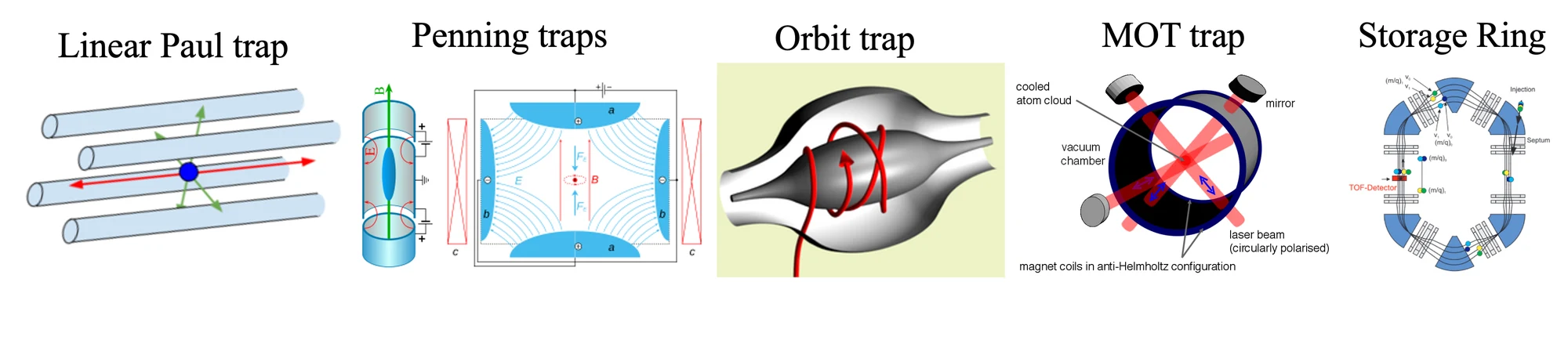

MASSPASS runs from 1 September 2023 to 31 August 2027, funded by the Research Council of Finland. Position and project information follow the university profile and project page , checked on 3 October 2026.